The September Jobs Report and the Rate Outlook: An October 2026 Indiana Housing Market Update
The September jobs report landed far below expectations, Treasury yields fell, and the odds of another Federal Reserve rate hike dropped. Here is what that means for mortgage rates, home prices, and buyers and sellers across Indiana, including Hamilton and Boone County.

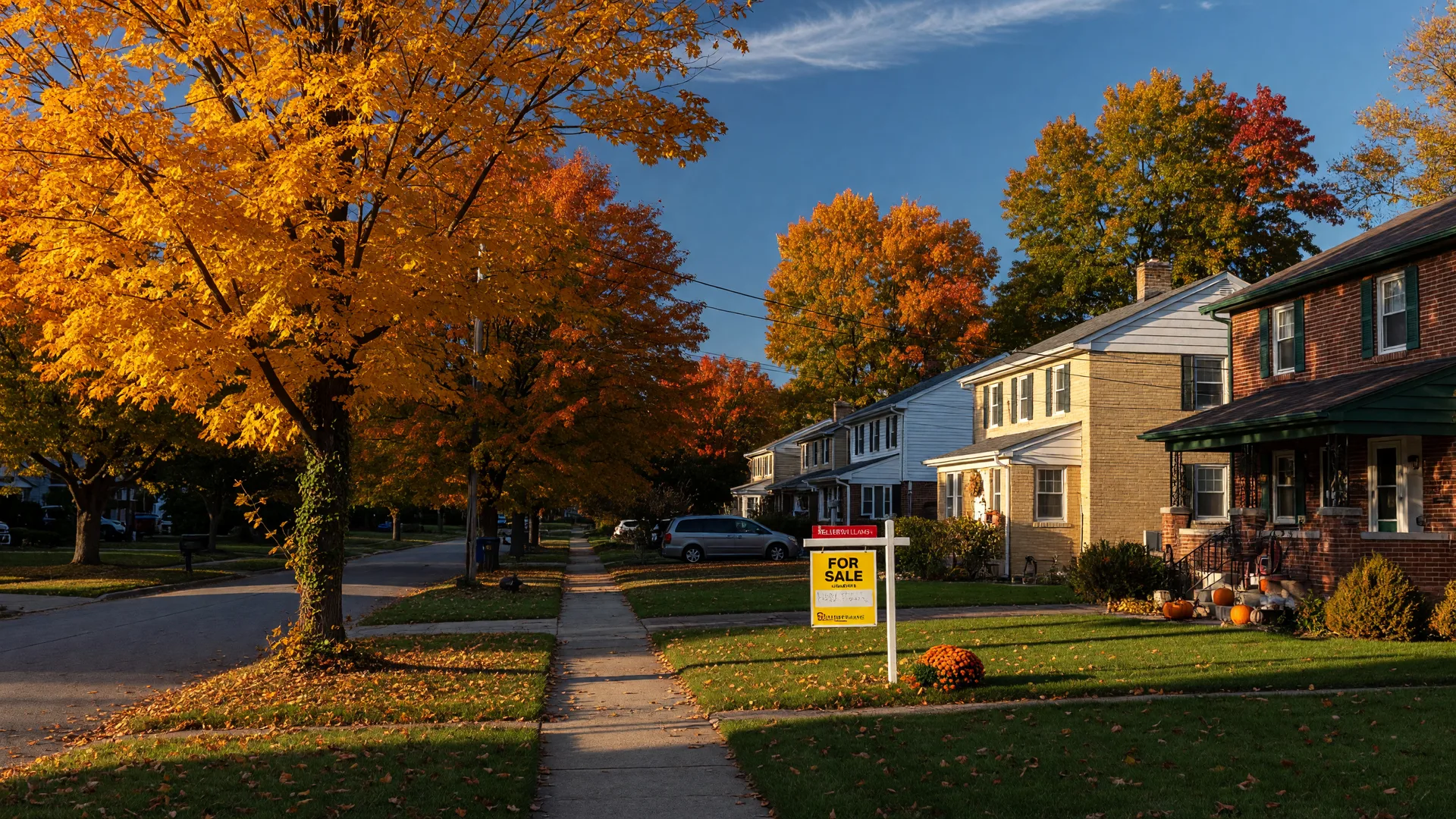
The big market story of early October 2026 is not a rate number, it is a labor number. On Friday, October 2, the Bureau of Labor Statistics reported that the U.S. economy added just 29,000 jobs in September, against a forecast near 84,000. The unemployment rate ticked up to 4.2%, wage growth slowed to its softest pace in about five years, and the prior two months were revised down by a combined 60,000 jobs.
Why does a jobs report matter to your home search? Because rates followed it immediately. Treasury yields fell on the release, and economists at NAR and First American said the softer labor data could push mortgage rates down and make another Fed hike less likely. That matters for buyers in Fishers, Carmel, Noblesville, Westfield, Zionsville, and Whitestown who have watched the 30-year fixed rate jump to 7.28%, the highest weekly reading since November 2023.
This is your early October 2026 market update: what the jobs report means, where rates and home prices actually stand, what the Fed's October 27-28 meeting could bring, and a straight-talk strategy from a local Associate Broker who works these communities every day.
What the September Jobs Report Actually Showed
The headline miss was the story, but the details matter just as much. Nonfarm payrolls grew by 29,000 in September, roughly a third of what economists expected. The unemployment rate rose to 4.2%, and average hourly earnings were up 3.1% from a year earlier, the slowest wage growth in about five years. Revisions subtracted another 60,000 jobs from July and August combined, which makes the labor market look cooler than it did a month ago.
For housing, a cooler labor market cuts both ways. On one hand, weaker jobs and incomes can soften homebuying demand over time. On the other hand, the same data pulls bond yields down, and mortgage rates track those yields closely. The day after the report, Treasury yields fell, and housing economists said the numbers could ease pressure on rates without plunging the market into recession. HousingWire, Inman, and other industry outlets all led with versions of the same headline: a Fed hike now looks less likely.
Mortgage Rates: 7.28% Is the Number to Know
Freddie Mac's weekly survey put the 30-year fixed mortgage rate at 7.28% for the week ending October 1, 2026, up from 7.03% the week before and the highest reading since November 2023. That was the sixth straight weekly increase, driven by climbing Treasury yields before the jobs report landed. Daily lender surveys in the first week of October ran even higher, with several tracking services showing conventional 30-year quotes in the mid-7s.
Rate quotes vary by lender, credit profile, loan program, and down payment, so the weekly survey is a benchmark, not a price list. What is consistent is the direction: borrowing costs are near their highest level in nearly three years, and payment math has changed materially for a typical Hamilton County purchase. A $450,000 loan at 7.28% carries a meaningfully higher monthly payment than the same loan did when rates were in the mid-6s last fall.
The October 27-28 Fed Meeting Is Now the Big Question Mark
The Federal Reserve raised its target range by 25 basis points in September 2026, its first hike in more than three years, to a range of 3.5% to 3.75%. Most policymakers projected at least one more hike by year-end, and futures markets were pricing a path toward roughly 4.1% by January 2027. Then the jobs report landed.
That changed the conversation. With hiring this soft and wage growth this cool, several economists judged another hike materially less likely at the October 27-28 meeting. Rates will still move with the data, and the jobs picture could be revised again before then, but the burden of proof for another hike just got heavier. For anyone deciding whether to buy now or wait, the Fed meeting is the single biggest calendar item between now and Thanksgiving.
The Fed is not the only forecast that matters, but October 27-28 is the day buyers and sellers should circle. A no-change decision would be the friendliest outcome rates have seen all fall.
The National Picture: Deepest Inventory in Over a Decade
The National Association of REALTORS reported August existing-home sales at a seasonally adjusted annual rate of 3.98 million, down 2.0% from July and 1.2% from a year earlier, a fifth straight monthly decline as higher rates temper demand. The flip side is supply: unsold inventory reached 1.62 million homes, a 4.9-month supply and the deepest national inventory reading in more than a decade.
Prices are still rising even with cooler sales, because the mix of homes selling skews toward higher-priced properties. The national median existing-home price climbed to $429,100, up 1.6% year-over-year. Looking ahead, forecasters assembled by Indiana's Business Research Center expect U.S. home prices to rise only about 1.1% in 2026 overall, while existing-home sales increase roughly 4.7%, a picture of slow, steady normalizing rather than collapse.
Indiana and Hamilton County: Steady Prices, Growing Choice
Indiana's market has stayed steadier than the national headlines. Redfin's July data put the statewide median sale price at $283,978, up 3.3% year-over-year, while Zillow's Indiana average home value sits near $260,808, up about 2.9%. The FHFA all-transactions house price index for Indiana rose to 538.71 in the second quarter. Central Indiana's 16-county market, tracked by F.C. Tucker, set a record midyear median of $323,250, up about 1% year-over-year, with August inventory up 17.8% and homes selling in a median of about 18 days.
Hamilton County continues to lead the region at a premium. Market trackers put the county's single-family median near $455,126 through September 2026, with the year-to-date county median holding close to $474,900 and Zillow's average Hamilton County home value near $468,156, up 2.6% year-over-year. Typical home values run about $574,000 in Carmel, $473,000 in Westfield, $444,000 in Fishers, and $392,000 in Noblesville. The full picture is on this site's Market Report page.
What keeps the corridor resilient? Top-rated school districts, one of the strongest employment corridors in the Midwest, Morse and Geist recreation minutes from new construction, the Monon Trail threading through Westfield, Carmel, and Fishers, and a short supply of developable land in the most desirable cities. Homeowners who locked in low rates are largely staying put, which keeps resale inventory tight in the best neighborhoods even as national supply builds.
What Buyers Should Do After This Jobs Report
Watch the October 27-28 Fed decision, but keep moving
If the Fed holds steady, mortgage rates could drift lower into November, but nobody should plan a purchase around a single meeting. Ask your lender what your rate would be today, what a quarter-point move would do to your payment, and whether a float-down or lock strategy makes sense for your timeline. Planning around the numbers you can control beats betting on the ones you cannot.
Put concessions and buydowns to work
With inventory up and days on market lengthening in central Indiana, sellers are increasingly offering concessions, closing-cost help, and rate buydown contributions to keep deals moving. A seller-paid buydown can meaningfully trim the first-year or two-year payment, often a better tool against a 7.28% rate than waiting for a perfect rate that may not arrive this year.
Compare new construction incentives
Builders across Westfield, Whitestown, and Noblesville are competing hard this fall with mortgage rate buydowns, closing-cost credits, and option packages aimed at keeping sales moving at today's rates. When you compare a resale against a new build, the builder incentive math can flip the decision. I pull current incentives before touring so we compare apples to apples.
Go where the inventory is, including off-market
In the hottest Hamilton County neighborhoods, the best homes still move faster than the averages suggest. Off-market listings, pre-listing outreach to owners, and direct seller conversations have helped my buyers land homes that never appeared in the public feeds. When competition thins because buyers are rate-shy, a prepared buyer with an off-market pipeline has an unusual edge.
What Sellers Should Do Now
The sellers who win in this market price to today's buyers, not to last spring's. Homes are still selling well in Hamilton County, often in two to three weeks, but the buyers who remain are more deliberate. They compare, they ask for concessions, and they walk away from overpriced listings.
Pricing strategy matters more than it has in years. A home priced right on day one typically outsells an overpriced home after repeated reductions, and it almost always nets more. Preparation still pays: fresh paint, decluttered rooms, and sharp listing photography separate the homes that go under contract in days from those that linger.
If you are weighing a move and worried about giving up a low mortgage rate, remember that many buyers today are negotiating seller concessions precisely because your low rate and your home's condition can be part of the deal. Full-price buyers with strong financing are out there. A local agent who knows the comps, the concession structure, and the buyer pool in your specific neighborhood is worth far more than a national forecast.
Buy Now or Wait? The Jobs Report Changed the Math, Not the Principle
The September jobs report is, on balance, mildly good news for mortgage rates and mildly uncertain news for the broader economy. Rates could ease into the fall if the Fed holds steady, but nobody can promise a meaningfully lower mortgage rate this year. What the data does promise is a market where buyers have more choice and more negotiating room than they have had in years, and where well-priced sellers still move quickly.
Here is how I frame it with my clients: today's market trades a higher interest rate for broader selection, more negotiating room, and real seller flexibility. If rates ease after October 27-28, expect buyer demand to return quickly and that leverage to shrink. The buyers who act while choice is deep are often the ones who secure concessions, avoid bidding wars, and buy a home with a payment they can live with.
Sources
Bureau of Labor Statistics Employment Situation report, September 2026 (released October 2, 2026). Federal Reserve FOMC meeting calendar and September 2026 policy statement. Freddie Mac Primary Mortgage Market Survey, week ending October 1, 2026. National Association of REALTORS Existing-Home Sales report, August 2026. Indiana Business Research Center 2026 housing forecast. Redfin Indiana and national housing market data, 2026. Zillow Indiana and Hamilton County home value data, fall 2026. FHFA All-Transactions House Price Index for Indiana, Q2 2026. F.C. Tucker Company central Indiana housing report, 2026. PropertyFocus Hamilton County single-family median, September 2026. Industry coverage of the September jobs report from HousingWire, Inman, CNBC, and related outlets.
Mortgage rates change daily and vary by lender, credit profile, loan program, and down payment. Verify current rates, pricing, and incentives directly with a lender or a licensed local real estate professional before making decisions. This article is for informational purposes only and is not financial advice.
Ready to Build Your Plan Around the Real Numbers?
Whether you are buying, selling, downsizing, or just curious what your home is worth, let's put the data together. I work Fishers, Carmel, Noblesville, Westfield, Zionsville, and Whitestown every day, and I will give you a straight answer about your move.