The Fall 2026 Buyer's Market: The Fed's Rate Path and What It Means for Hamilton & Boone County
The Federal Reserve raised its benchmark rate in September for the first time since 2023, mortgage rates are holding near three-year highs, and national housing inventory just reached its deepest level in over a decade. Here is what that combination means for buyers and sellers across Hamilton and Boone County this fall.

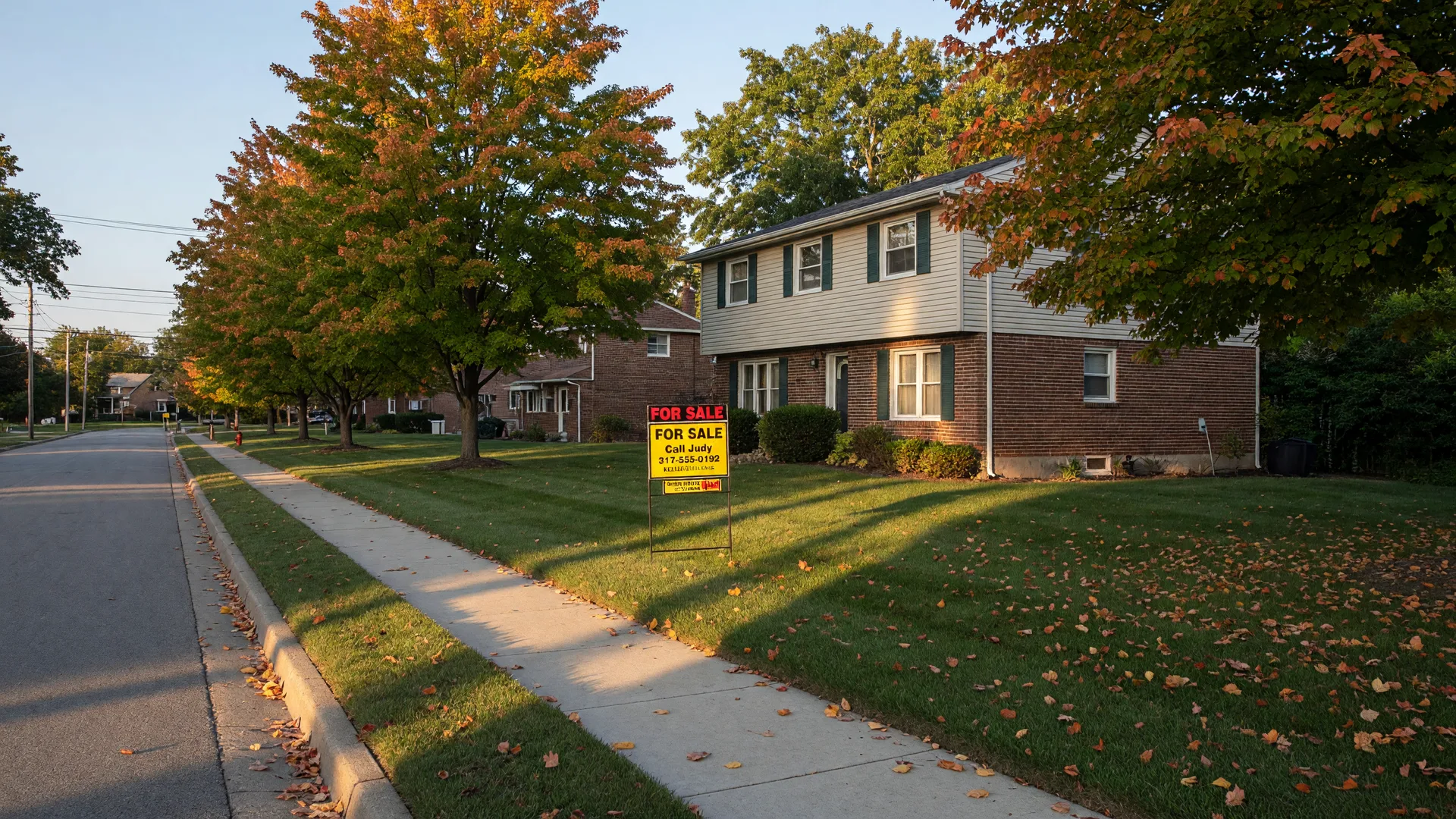
The fall 2026 housing market is being written by two forces pulling in opposite directions. The Federal Reserve raised its benchmark interest rate on September 16 for the first time since 2023, pushing mortgage rates to their highest level in nearly three years, while at the same time the supply of homes for sale nationally reached its deepest inventory in over a decade.
Here is the part that matters locally: Indiana keeps setting price records even as inventory climbs, and Hamilton County remains the tightest, most competitive corner of central Indiana. For buyers, that means more choices and real negotiating room. For sellers, it means pricing and preparation matter more than they have in years.
This is your early October 2026 market report: the Fed's rate path, the national numbers, the Indiana and central Indiana picture, the Hamilton County specifics, and a straight-talk strategy from a local Associate Broker who works Fishers, Carmel, Noblesville, Westfield, Zionsville, and Whitestown every day.
The Fed Raised Rates. Here Is What Changed.
At its September 16 meeting, the Federal Open Market Committee raised the federal funds rate by a quarter point to a target range of 3.75% to 4.00%, the first hike since 2023. The vote was unanimous, and the Fed pointed to elevated inflation driven largely by energy prices along with a steady labor market as the reasons for moving.
The Fed signaled that at least one more quarter-point hike is likely before the end of the year, and markets now price in another increase. The next FOMC meeting is October 27 and 28, 2026, which makes it the next major policy signal for anyone watching mortgage money.
What this means for housing: the Fed does not set mortgage rates directly, but its policy path moves the bond market that mortgage rates track. Every hike or hawkish signal keeps upward pressure on the 30-year fixed rate, which is exactly what we have seen through September and into October.
Where Mortgage Rates Stand Right Now
Freddie Mac's weekly survey put the average 30-year fixed mortgage rate at 7.28% on October 1, 2026, up from 7.03% the week before and 6.34% a year earlier. It is the highest reading since November 2023 and the sixth straight weekly increase. The 15-year fixed rate averaged 6.60%, up from 6.42% the prior week.
Rates are a national product, quoted the same in Fishers as in Boston. What changes locally is the payment math: at 7.28%, a $450,000 Hamilton County purchase financed at 20% down carries a meaningfully higher monthly payment than the same home did two years ago. That is why the rest of this report, the inventory and negotiating data, matters so much right now.
The October 27 to 28 FOMC meeting is the next event that could move the needle. Industry forecasts generally expect rates to hold in the mid-6% to low-7% range for the rest of the year, with the Fed's decision, not a near-term decline, as the next real signal.
National Sales Cool While Inventory Deepens
The National Association of REALTORS reported August existing-home sales at a seasonally adjusted annual rate of 3.98 million, down 2.0% from July and 1.2% from a year ago. It was the third straight monthly decline, and NAR's chief economist attributed the dip directly to high mortgage rates, noting that rates and sales move in opposite directions.
The flip side is supply. Total housing inventory rose to 1.62 million homes, a 4.9-month supply, the deepest national inventory picture in over a decade. The national median existing-home price still climbed to $429,100, up 1.6% year-over-year, marking the 38th consecutive month of annual price increases, because the for-sale mix still skews toward higher-priced homes.
The September existing-home sales report is due October 13, 2026, so the August data is the clearest window we have into national momentum this fall. Expect the same theme: sales restrained by rates, inventory growing, and prices holding because supply is still historically lean.
Indiana: Record Prices Meet a Growing Buyer's Market
Indiana's market has been steadier than the national headlines all year. The Indiana Association of REALTORS reported a record statewide median sale price of $290,000 in June 2026, with sales up 2.5% in the first half of the year and new listings up 5%. Inventory rose for 22 straight weeks through early August, reaching roughly 4,863 average daily listings.
Central Indiana tells the same story with bigger numbers. F.C. Tucker Company reported a record $323,250 median sale price across its 16-county region at midyear, up about 1% year-over-year, with homes selling in a median 18 days. By July, available inventory was up roughly 20% year-over-year, and in August it was up 17.8% while prices held steady, a clear sign of a market tilting toward buyers.
Why the resilience? Hamilton and Boone County benefit from demand drivers that do not move with a single rate report: top-rated school districts, one of the strongest employment corridors in the Midwest, the Monon Trail and Grand Park lifestyle, and a shortage of developable land in the most desirable cities. Families and retirees keep moving here because the quality of life is hard to replicate, even when financing is expensive.
Hamilton County: Still the Tightest, Still the Strongest
Hamilton County continues to lead central Indiana. The market data on this site's Market Report page, sourced from MIBOR, puts the county median near $520,500 as of June 2026, up about 3.7% year-over-year, with 659 closed sales, 818 active listings, and a median 8 days on market.
Supply in the county sits at roughly 1.1 to 1.2 months, still far tighter than the broader Indianapolis market, which is why the best Hamilton County homes continue to move fast even as the region cools. Zillow puts the county's average home value at $468,156, up 2.6% year-over-year, and its median listing price near $464,950 in August 2026.
The practical translation: in Hamilton County, the buyer's market is more selective than the headlines suggest. There is more to choose from than a year ago, and sellers are more willing to negotiate, but well-priced homes in Carmel, Fishers, Westfield, and Noblesville still attract multiple offers. The leverage is real, and it is best used by prepared buyers.
What Buyers Should Do in This Market
Put seller concessions to work
The biggest change in this market is at the negotiation table. With inventory up and days on market lengthening, sellers in central Indiana are increasingly offering concessions, closing-cost help, and rate buydown contributions to keep deals moving. A seller-paid buydown can lower your first-year or two-year payment meaningfully, which is a far more powerful tool against today's rates than waiting for a perfect rate that may not arrive.
Shop for the payment, not the rate
A rate of 7.28% on a smaller loan can cost less each month than a rate of 6.5% on a larger loan. Buyers who fixate on the headline number can talk themselves out of homes that actually fit their budget. Run the full monthly payment, property taxes, HOA dues, and insurance. This site's affordability guide walks through the 28/36 math with a calculator.
Go where the inventory is, including off-market
In the hottest Hamilton County neighborhoods, the best homes still move faster than the averages suggest. That is where creative search strategies pay off. Off-market listings, pre-listing outreach to owners, and direct seller conversations have helped my buyers land homes that never appeared in the public feeds. When competition thins because buyers are rate-shy, a prepared buyer with an off-market pipeline has an unusual edge.
For 55+ buyers, rates often matter less
Many active-adult buyers arrive with substantial home equity or pay cash for their next-chapter homes, which changes the rate discussion entirely. If you are considering a 55+ community across Fishers, Westfield, Noblesville, Zionsville, or Whitestown, see the October 2026 guide to active-adult living in this journal, or the full 55+ Communities guide.
What Sellers Should Do Now
The sellers who win in this market are the ones who price to today's buyers, not to last spring's. Homes are still selling well in Hamilton County, but the buyers who remain are more deliberate. They compare, they ask for concessions, and they walk away from overpriced listings.
Pricing strategy matters more than it has in years. A home priced right on day one typically outsells an overpriced home after repeated reductions, and it almost always nets more. It also pays to prepare: fresh paint, decluttered rooms, and sharp listing photography still separate the homes that go under contract in days from those that linger.
If you are weighing a move and worried about giving up a low mortgage rate, remember that many buyers today are negotiating seller concessions precisely because your low rate and your experience can be part of the deal. A local agent who knows the comps, the concessions, and the buyer pool in your specific neighborhood is worth far more than a national rate forecast.
The "Buy Now or Wait?" Question
Nobody knows exactly where rates go next, and anyone who tells you they do is guessing. What we do know is that waiting has a real cost: when rates eventually ease, buyer demand historically returns quickly, and the negotiating power that exists today evaporates. The buyers who moved in today's market are often the ones who avoided bidding wars, secured concessions, and locked in a home with a manageable payment they can live with.
Here is how I frame it with my clients: today's market trades an uncomfortable interest rate for a broader selection, more negotiating room, and real seller flexibility. No single variable, rate included, should make the entire decision. A home that fits your life and your budget in Hamilton County is the goal, and there are more of those homes on the market right now than there have been in years.
Rates are a national number. Your payment, your neighborhood, and your negotiating position are local. That is the difference a local agent makes.
Sources
Federal Reserve FOMC statement, September 16, 2026 (federal funds target raised 25 basis points to 3.75%-4.00%). CNBC coverage of the September 2026 Fed rate decision. Freddie Mac Primary Mortgage Market Survey (October 1, 2026). National Association of REALTORS Existing-Home Sales report, August 2026 (released September 10, 2026). Indiana Association of REALTORS 2026 mid-year housing update and housing hub data. F.C. Tucker Company central Indiana market reports (July and August 2026). MIBOR market data as published on EverythingHamiltonCounty.com's Market Report page. Zillow Hamilton County and Indiana housing market data.
Mortgage rates change daily and vary by lender, credit profile, loan program, and down payment. Verify current rates and pricing directly with a lender or a licensed local real estate professional before making decisions. This article is for informational purposes only and is not financial advice.
Ready to Make a Plan for This Market?
Whether you are buying, selling, downsizing, or just curious what your home is worth, let's put the real numbers together. I work Fishers, Carmel, Noblesville, Westfield, Zionsville, and Whitestown every day, and I will give you a straight answer.