Mid-Year Market Refresh
— July 2026
Mortgage rates hit a seven-week low, Congress passed the most significant housing bill in years, and builder confidence remains deep in negative territory. Here is what the latest developments mean for buyers and sellers in Hamilton and Boone Counties.

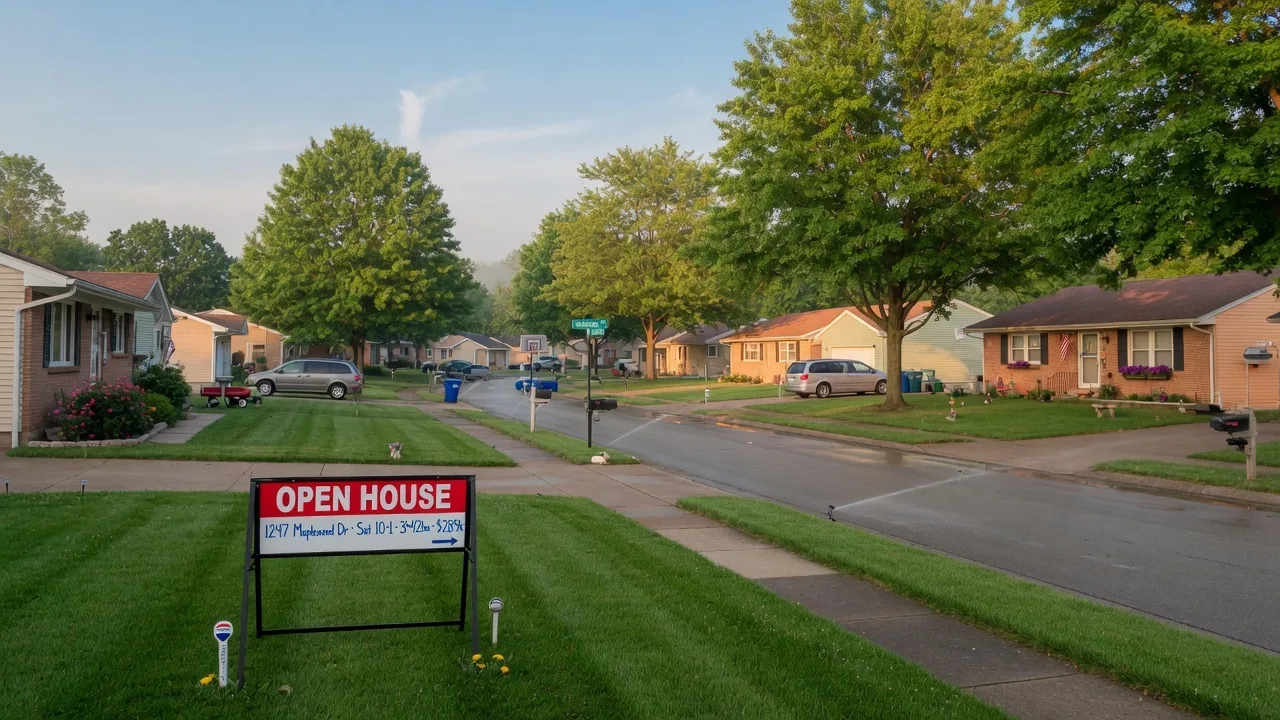
July 2026 has arrived with a complicated but Opportunity-rich picture for the housing market. Mortgage rates have drifted down to 6.43% — a seven-week low that is pulling purchase demand higher. Congress passed the 21st Century ROAD to Housing Act with overwhelming bipartisan support, introducing new rules for institutional investors that could reshape competition in fast-growing suburban markets. And builder confidence remains stuck at 35, the 14th consecutive month below the threshold that separates optimism from pessimism.
For buyers and sellers in Carmel, Fishers, Noblesville, Westfield, Zionsville, and Whitestown, understanding how these national stories translate locally is the difference between making a confident move and second-guessing one. Here is what you need to know right now.
Where mortgage rates stand right now
Freddie Mac PMMS and Bankrate surveys, July 1–6, 2026.
Down 7 bps from last week
Freddie Mac PMMS, July 1 2026
Stable range, 7-week low
Freddie Mac PMMS, July 1 2026
Holding steady
Bankrate survey, July 6 2026
Rates are at their lowest point in seven weeks, and purchase demand is edging higher as buyers respond. If you have been waiting for a favourable moment to lock a rate, this window is worth a conversation with your lender — before the FOMC meeting on July 28–29 potentially shifts market expectations.
The stories shaping the market right now
21st Century ROAD to Housing Act
Passed the Senate 89–10 and House 396–13 in June 2026, this bipartisan bill now awaits the President's signature. Its headline provision restricts large institutional investors (those holding 350+ single-family rental homes) from purchasing additional properties — a direct response to the concern that Wall Street landlords have been pricing out individual buyers in fast-growing suburban markets. For Hamilton County buyers, this could ease competition from institutional buyers over the coming months. The bill also eliminates the seven-year forced disposal requirement for certain build-to-rent purchases and aims to boost overall housing supply. Key sections take effect October 1, 2026, with full implementation phased over the following year.
FHFA Credit Score Model Transition
Fannie Mae published historical credit score data for FICO Score 10T and VantageScore 4.0 in early July, signalling that the Government-Sponsored Enterprises are moving toward updated scoring models. VantageScore 4.0 tends to evaluate thin-file and younger borrowers more favourably than legacy FICO models, which could expand mortgage eligibility for first-time buyers and those with limited credit histories. For Indiana borrowers, this is a medium-term positive — particularly for younger buyers entering the Hamilton County market.
Builder Confidence at 35 — 14th Month Below 50
The NAHB/Wells Fargo Housing Market Index fell two points to 35 in June 2026 — the 14th consecutive month below the 50-point threshold that separates positive from negative builder sentiment. Affordability challenges, mortgage rates near 6.5%, and rising material costs continue to weigh on builder optimism. Nationally, housing starts came in at 1.177 million units in May, well below the 1.430 million forecast. For Hamilton County buyers, builder hesitation means the new-construction inventory you see today in Westfield, Whitestown, and Noblesville may represent the most selection you will get this year.
Existing-Home Sales Rise 3.2% in May
National existing-home sales increased 3.2% month-over-month to an annualized rate of 4.17 million units in May 2026, with a national median price of $429,300 and 4.5 months of inventory. Inventory is slowly improving, but the market remains favouring sellers overall. Locally, Hamilton County's situation is tighter: just 1.1 months of supply with a $500,000 median price. June data, expected July 9, will reveal whether the summer buying season maintained momentum.
Local numbers, national context
Data as of May 2026 MIBOR market report. Sources: MIBOR, NAR, Redfin.
What these trends mean for Hamilton and Boone Counties
National headlines set the context, but the decisions you make are local. Here is how the stories above translate to the Hamilton County and Boone County markets:
The ROAD Act could reduce investor competition. Hamilton County's fast-growing suburbs — particularly Fishers, Westfield, and Carmel — have attracted institutional buyers who purchase homes as rental properties. The new legislation restricts companies holding 350+ single-family homes from purchasing additional properties, effective October 1. For individual buyers competing in multiple-offer situations, this could meaningfully reduce a source of well-capitalized competition over the coming quarters.
Lower rates are pulling buyers off the sidelines. At 6.43%, the 30-year fixed is at its lowest point in seven weeks, and purchase demand is responding. In a market with just 1.1 months of inventory, even a modest increase in buyer activity tightens an already competitive landscape. If you are a buyer in Fishers, Carmel, or Westfield, the window between now and the FOMC meeting on July 28 may be the best rate environment you see this summer.
Builder hesitation means fewer new options. With the NAHB index at 35 for the 14th straight month and housing starts 6.7% below year-ago levels, the pipeline of new homes entering the market is shrinking. In Hamilton County, where communities like Finch Creek in Noblesville, Kimblewick in Westfield, and Osborne Trails are actively building, the current selection may represent the most options available this year. Builder incentives — rate buy-downs, closing cost credits, upgrade packages — are more likely now than they will be when confidence recovers.
Indianapolis's #4 NAR hotspot ranking confirms demand is structural. The National Association of Realtors named Indianapolis the #4 top homebuying market for 2026, driven by job growth, relative affordability, and lifestyle appeal. Hamilton County sits at the heart of that demand — with top-rated schools, low crime, strong community infrastructure, and home appreciation at 4.2% year-over-year. This is not a temporary spike; it is a market with durable fundamentals.
What to do right now
For Buyers
Lock your rate soon. At 6.43%, the 30-year fixed is at a seven-week low — and purchase demand is edging higher as rates ease. If you are pre-approved and ready, this window may not last.
Watch for builder incentives. With builder confidence at 35 nationally, new-construction communities in Westfield, Whitestown, and Noblesville may offer rate buy-downs, closing cost credits, or upgrade packages that did not exist six months ago.
Act before institutional buyer restrictions phase in. The ROAD Act's restrictions on large investors take effect October 1. In the interim, investor activity in fast-growing suburbs like Fishers and Carmel may remain elevated — meaning more competition for individual buyers in the near term.
Think long-term equity. Indiana home prices are up 3.7% statewide year-over-year, and Hamilton County is outpacing that at 4.2%. Even at current rates, buying into a strong appreciation market builds equity faster than renting.
For Sellers
Price strategically. With 1.1 months of supply, the market favours sellers — but overpriced listings are sitting 40+ days, which triggers price reductions and weaker final terms. The first 14 days are everything.
Expect more buyer foot traffic. Rising sales volume (up 3.2% nationally in May) and seasonal summer demand mean well-priced Hamilton County listings will attract serious attention. Prepare your home accordingly.
Consider your timing with the ROAD Act. If you are selling to an investor-buyer, the current window before institutional restrictions tighten could affect their purchasing calculus. Talk to your agent about how this affects your specific buyer pool.
Leverage the supply shortage. With just 1.1 months of inventory, qualified buyers have fewer options. A well-marketed, well-priced home in Carmel, Fishers, or Westfield can command competitive offers.
Key dates and data releases to watch
Sources
Freddie Mac Primary Mortgage Market Survey (July 1, 2026). Bankrate mortgage rate survey (July 6, 2026). U.S. Census Bureau Housing Starts (May 2026). National Association of Realtors Existing-Home Sales (May 2026). NAHB/Wells Fargo Housing Market Index (June 2026). Fannie Mae credit score model data (July 2026). 21st Century ROAD to Housing Act — Baker Botts and Bipartisan Policy Center analyses (June 2026). MIBOR Market Insights Hamilton County SFR (May 2026). Redfin Indiana Housing Market (July 2026). NAR housing market forecasts (2026).
This article is intended for informational purposes only and does not constitute financial, lending, or investment advice. Consult a licensed mortgage professional for personalised rate quotes and a real estate professional for market-specific guidance.
Navigate This Market with a Local Expert
Whether you are buying your first home, listing a property, or trying to understand what the latest headlines mean for your specific neighbourhood, a quick conversation can give you clarity. No pressure — just straight talk from someone who has tracked every cycle in this county for 25 years.