Navigating the Lock-In Effect: Creative Strategies for Hamilton County Homeowners
If you want to move but are reluctant to trade your sub-4% mortgage for today's 6.5% rates, you are not alone. Here are the creative financing strategies — rate buydowns, assumable mortgages, seller financing, and more — that are helping Hamilton County families make the move they need without giving up their financial advantage.

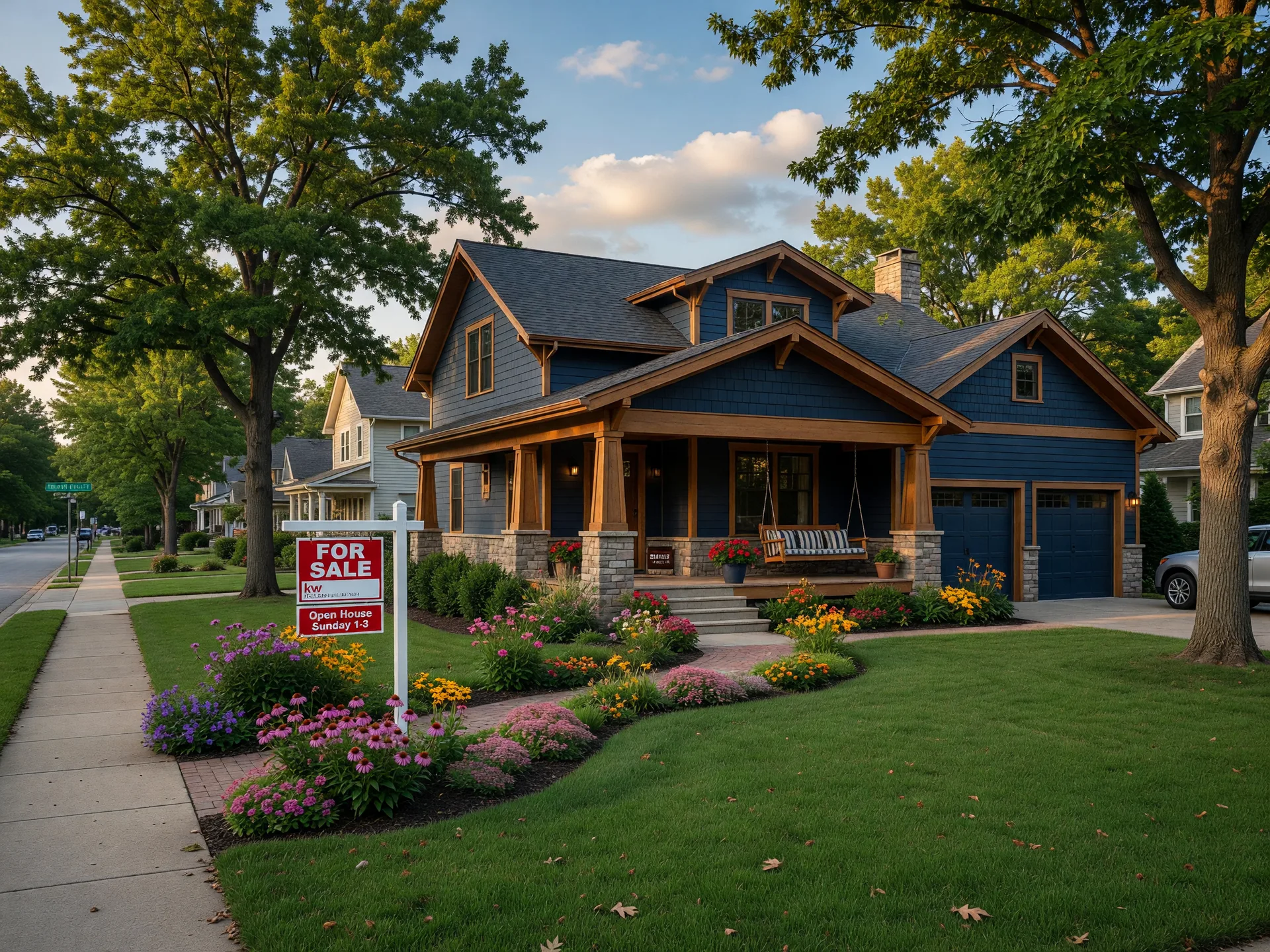
If you bought or refinanced your home between 2020 and 2022, you are probably sitting on a mortgage rate below 4% — and you are probably not eager to give it up. That is the lock-in effect, and it is one of the most powerful forces shaping today's housing market. Nationwide, roughly 40% of all mortgage holders have a rate below 4%, and 70-80% are below 5%. In Hamilton County, where the median home price is $500,000, the difference between a 3.5% rate and today's 6.5% rate on a typical mortgage is roughly $1,100 per month.
The lock-in effect is the single biggest reason inventory is still so tight — just 1.1 months of supply in Hamilton County compared to the 4-6 months that defines a balanced market. Homeowners who might otherwise list their home for a job relocation, downsizing, or lifestyle change are staying put because the math of replacing their mortgage feels punishing.
But here is the truth that many homeowners do not realize: you are not limited to the binary choice of "stay in your current home forever" or "give up your low rate and accept 6.5%." There are creative financing strategies that can bridge the gap — strategies that are increasingly common in Hamilton County transactions as buyers and sellers look for ways to make moves work in today's rate environment. Let me walk you through the most effective ones.
Why so many homeowners are staying put
The rate gap is the biggest obstacle to inventory growth. Here is the data behind it.
The real cost of staying: While the lock-in effect protects your monthly payment, it also means delaying a move that could better suit your current life stage — whether that is downsizing to a 55+ community, relocating for a job, or freeing up equity for retirement. The question is not just whether you can afford to move, but whether staying is costing you in other ways.
Five strategies to bridge the rate gap
Each of these strategies is being used right now in Hamilton County transactions. Some work best for buyers, others for sellers — and some require both parties to be open to thinking beyond the conventional mortgage.
Temporary Rate Buydowns (2-1 Buydown)
A 2-1 buydown reduces the buyer's interest rate by 2% in the first year and 1% in the second year, with the rate returning to the note rate in year three. The seller or builder typically pays the buydown cost — which is effectively prepaid interest deposited into an escrow account. For a $400,000 loan at 6.5%, the first-year payment would be calculated at approximately 4.5%, saving the buyer roughly $500 per month. This is the most common creative strategy I see working in Hamilton County right now, especially in new-construction communities like Finch Creek and Kimblewick where builders are offering buydown incentives as part of their standard packages.
Seller-Financed Second Mortgages
In this arrangement, the seller carries a second mortgage — often at a below-market rate — that covers part of the purchase price while the buyer secures a first mortgage for the remainder. For example, a buyer might put down 10%, get a first mortgage for 70% of the price, and the seller holds a 20% second mortgage at 4% interest for five years. The buyer gets a blended rate well below 6.5%, and the seller defers capital gains on the second mortgage principal. This works especially well for sellers who own their home free and clear and are willing to be patient with their proceeds.
Assumable Mortgage Negotiations
FHA and VA loans are assumable — meaning a qualified buyer can take over the seller's existing mortgage at its original rate. A seller with a 3.25% FHA loan from 2021 who is ready to move can offer a massive financing advantage to a buyer. The catch: the buyer must qualify for the assumption, and the seller typically asks the buyer to cover the difference between the sale price and the remaining loan balance in cash. For a home worth $450,000 with a $300,000 remaining balance at 3.25%, the buyer would need $150,000 in equity cash — but would get a mortgage rate nearly half the current market. This is a niche strategy, but in the right scenario it is transformative.
Equity-Sharing or Co-Investment Models
Companies like Unison and Point offer equity-sharing arrangements where they provide part of the down payment in exchange for a share of the home's future appreciation. For a buyer who has good income but limited savings for a 20% down payment, this can bridge the gap — and the seller benefits from a buyer who is pre-qualified with a stronger overall financial picture. These programs are still relatively new to the Indiana market, but they are gaining traction in higher-priced areas like Carmel and Zionsville where the down payment hurdle is steepest.
Lease-to-Own and Rent-to-Own Contracts
A lease-to-own agreement gives the buyer the right to purchase the home at a predetermined price after a rental period of 12-24 months. Part of the monthly rent is credited toward the eventual down payment. For a seller who is having trouble selling at their target price in the current market, this can generate monthly income while building toward a future sale. For a buyer who needs time to build credit or save for a larger down payment, it locks in today's price and provides a path to homeownership. This is a viable strategy in Hamilton County's slower-moving price brackets above $700,000.
How the lock-in effect is playing out in our communities
The lock-in effect does not affect every Hamilton County community equally. In neighborhoods where homes were purchased or refinanced heavily during the 2020-2022 rate trough, the effect is strongest. In communities with a higher share of cash buyers — certain luxury enclaves in Carmel and Zionsville — the lock-in effect is less pronounced because there is no mortgage to replace.
In Fishers and Westfield, where many young families bought their first homes in 2020-2021 at rates between 2.75% and 3.5%, the lock-in effect is particularly acute. These homeowners have outgrown their starter homes but are reluctant to trade up because the monthly payment on a larger home at today's rates would be significantly higher. Creative strategies like 2-1 buydowns and seller-financed seconds are most common in these communities.
In Noblesville and Westfield's new-construction corridors, builders are the most aggressive users of rate buydowns. Communities like Finch Creek (Del Webb) and Osborne Trails (Lennar) routinely offer buydown incentives as part of their standard packages. For buyers who are on the fence about whether they can afford to move, these incentives can make the difference between a home that fits their budget and one that does not.
In Zionsville and Whitestown, the lock-in effect is less of a factor in the luxury and new-construction segments, but it still suppresses the overall inventory of existing homes. Sellers in these communities who are willing to consider creative financing terms often find that their listings attract more attention and sell faster than comparable homes that require conventional financing only.
For 55+ buyers specifically, the lock-in effect creates a unique challenge. Many retirees own their homes free and clear or have very low balances, so the mortgage rate gap is less relevant. The bigger question is often whether the equity they have built can be deployed efficiently into a downsized home or a 55+ community without triggering a large tax bill. For these clients, I focus on the total cost of ownership — not just the mortgage payment — and evaluate whether the lifestyle benefits of moving outweigh the financial friction.
Common questions about creative financing
Can I negotiate a rate buydown from any seller?
Yes, but it is most common in new-construction communities where builders have established incentive programs. In resale transactions, the buydown cost is typically credited to the buyer as part of the closing cost negotiations and reflected in the final sale price. Your agent can help you understand which approach fits your specific transaction.
How much does a 2-1 buydown typically cost?
The cost of a 2-1 buydown depends on the loan amount, the note rate, and the length of the buydown period. For a $400,000 loan, the buydown typically costs the seller $8,000-$12,000 in prepaid interest. This is less expensive than a full price reduction and provides the buyer with immediate monthly payment relief.
Is an assumable mortgage hard to qualify for?
The qualification process for an FHA or VA loan assumption is similar to getting a new mortgage — the buyer must meet credit, income, and debt-to-income requirements. The biggest challenge is usually the equity gap: the buyer needs cash to cover the difference between the sale price and the remaining loan balance.
What if I want to sell but my buyer needs creative financing?
This is exactly where an experienced agent earns their commission. I have relationships with lenders who specialize in buydowns, assumptions, and second mortgages. I can help you evaluate which creative strategy makes financial sense for your situation and connect you with the right professionals to execute it.

Susan Roberts
The lock-in effect is not permanent. Mortgage rates are expected to trend downward through the end of 2026, with most major forecasters projecting rates between 5.7% and 6.2% by Q4. But waiting for rates to fall to a specific number before making a move is a gamble that has not paid off for most homeowners over the past two years.
The better approach is to evaluate your options with a clear understanding of the creative strategies available. Whether you are a seller who wants to attract more buyers by offering a buydown, or a buyer who wants to explore assumable mortgages, I can help you model the scenarios and connect you with lenders who specialize in these solutions.
With over 25 years of experience in Hamilton County, I have helped hundreds of families navigate every kind of market condition. The current market rewards creativity, patience, and a willingness to think beyond the conventional mortgage. Let us explore what is possible for your situation.
Let's explore your options
Whether you are wondering if you can afford to move without losing your low rate, or you are a seller looking to attract buyers in a tight market, a 30-minute conversation can clarify your path forward. No commitment, just straight talk from someone who has been doing this for 25 years.
Book a Free ConsultationDo Not Let the Lock-In Effect Keep You Stuck
Whether you are downsizing to a 55+ community, relocating for work, or simply ready for a change, there are more options available than you might think. A conversation with a local expert who knows the market — and the creative strategies that work in it — is the first step toward making your move.
Sources
Federal Housing Finance Agency — Mortgage Rate Data (2026). Redfin — Hamilton County Housing Market Data (May 2026). Freddie Mac Primary Mortgage Market Survey (July 2026). Fannie Mae — Mortgage Rates Expected to Move Below 6 Percent by End of 2026 (July 2026). National Association of Realtors — Existing-Home Sales Data (July 2026). Bankrate — 2-1 Buydown Guide (2026). Unison — Home Equity Sharing Program. Point — Co-Investment Home Financing. Zillow Indiana Mortgage Rates (July 2026). Forbes Advisor — Mortgage Rate Forecast 2026-2027. CME FedWatch Tool (July 2026).
This article is intended for informational purposes only and does not constitute financial, lending, or investment advice. Creative financing strategies involve specific terms, conditions, and eligibility requirements. Consult a licensed mortgage professional and a qualified real estate attorney for personalized guidance on your specific situation.